

What Happens to Your Car When Youre Arrested?
News and ResourcesWhat Happens to Your Car When You're Arrested?
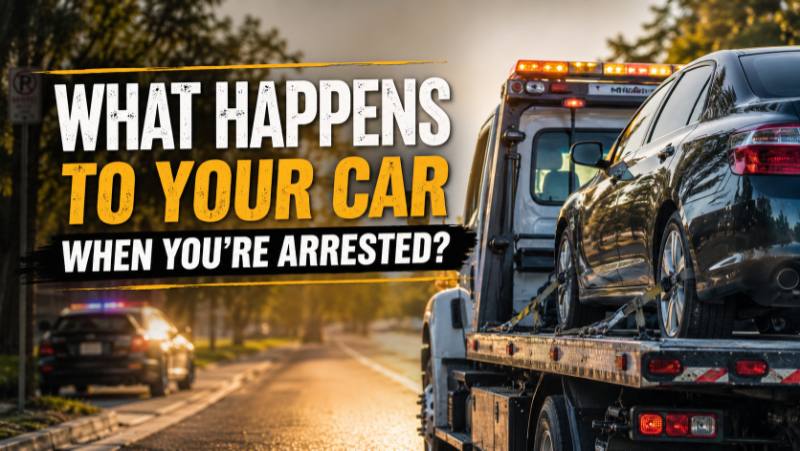
An arrest separates you from more than your phone, wallet, and normal routine. If you were driving when police took you into custody, there is also an immediate practical question: what happens to your car?
TL;DR: What Happens to Your Car?
If you’re arrested while driving, your car may be released to another lawful driver, left parked and secured, towed to an impound lot, or held as evidence. The outcome depends on where it’s parked, why you were arrested, and the agency’s policies. To see how to actually get it back (and what to ask), jump ahead to the checklist below.Jump to: How Do You Get the Car Back?
There is no single answer for every Colorado arrest. The vehicle may be released to another person, secured where it is, towed for safekeeping, or held because it is connected to the alleged offense. The outcome depends on where the car is located, why the driver was arrested, whether another lawful driver is available, and the policies of the agency making the arrest.
Is Your Car Automatically Towed After an Arrest?
Not necessarily. An arrest does not mean every vehicle must be impounded, but police may have authority to remove it when the driver can no longer take responsibility for it.
In Boulder, for example, Boulder Revised Code § 7-7-2 expressly authorizes a peace officer to remove a vehicle when its driver is taken into custody. The same section permits removal when a vehicle obstructs traffic or presents certain public-safety problems.
Depending on the circumstances and agency policy, alternatives may be possible. Another lawful driver may be allowed to take custody of the vehicle, or a legally parked vehicle may sometimes be secured rather than towed. But that should never be assumed. If the vehicle is in a traffic lane, unsafe location, restricted parking area, or another place where it cannot reasonably remain, towing becomes much more likely.
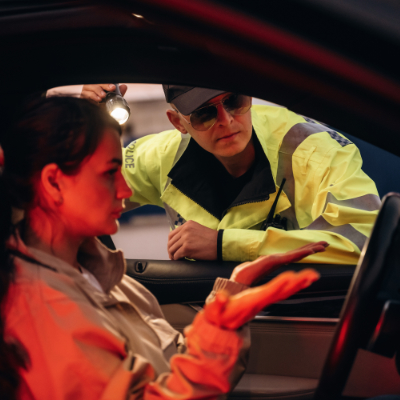
DUI Arrests Often Create an Immediate Vehicle Problem
A DUI arrest is an obvious example because the driver cannot continue driving after being taken into custody. If no appropriate person can take the vehicle and it cannot safely remain where the stop occurred, officers may arrange for it to be towed.
The same issue can arise when an officer discovers an outstanding warrant during a traffic stop. The warrant may have nothing to do with the car, but once the only driver is transported to jail, someone still has to legally and safely deal with the vehicle.
Where Does the Car Go?

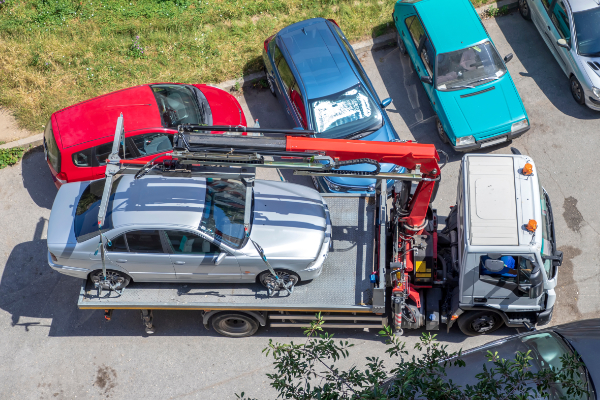
A police-directed tow generally sends the vehicle to a towing carrier or impound facility used by the agency. Colorado's Department of Revenue describes a nonconsensual law-enforcement tow as a public tow and outlines notification procedures on its Tow Carrier and Abandoned Vehicle Information page.
If you do not know where the car went, start with the law-enforcement agency that made the arrest. Ask whether the vehicle was towed, which company has it, and whether police placed any hold on its release.
Do this promptly. Towing and storage charges can accumulate, and Colorado has procedures that eventually allow qualifying unclaimed vehicles to be sold or disposed of after required notice and waiting periods.
Can Police Search an Impounded Car?
Possibly, but an inventory search is different from an open-ended search for evidence.
This issue has unusually strong Boulder roots. In Colorado v. Bertine, a U.S. Supreme Court case arising from a Boulder DUI arrest, the Court upheld an inventory search of an impounded vehicle conducted under standardized police procedures. Inventory searches are generally justified as caretaking measures used to document and protect property, address dangerous items, and reduce disputes over missing property.
That does not mean an arrest gives police unlimited authority to search a vehicle for evidence. Different Fourth Amendment rules apply to investigative searches. Tayler Made Bail Bonding has a separate explanation of probable cause and vehicle searches for more background on that distinction.
If the legality of a vehicle search could affect a criminal case, that is an issue for a criminal-defense attorney, not the tow company or bail bond agent.
What If the Vehicle Itself Is Evidence?
Sometimes the car is more than transportation. It may be connected to a collision, contain evidence relevant to an investigation, or itself be evidence in the alleged crime. In those situations, a law-enforcement hold may prevent release even if the owner is ready to pay towing charges.
Items taken into evidence may also follow separate release procedures. The City of Boulder explains that evidence is held until appropriate authorization for release is received through its Property and Evidence Retrieval process.
How Do You Get the Car Back?
Once the immediate arrest and bail issues are under control, handle the vehicle separately:
- 1. Confirm which agency ordered the tow.
- 2. Get the towing company's name, location, and contact information.
- 3. Ask whether there is a police or investigative hold.
- 4. Ask the tow facility exactly what identification, ownership documentation, insurance information, payment, or licensed driver it requires.
- 5. Retrieve the vehicle as soon as practical to limit additional storage charges.
If the vehicle was impounded by the City of Boulder and you believe the impound was improper, Boulder Municipal Court provides a vehicle impound hearing request.
Getting Out of Jail Does Not Get the Car Out of Impound
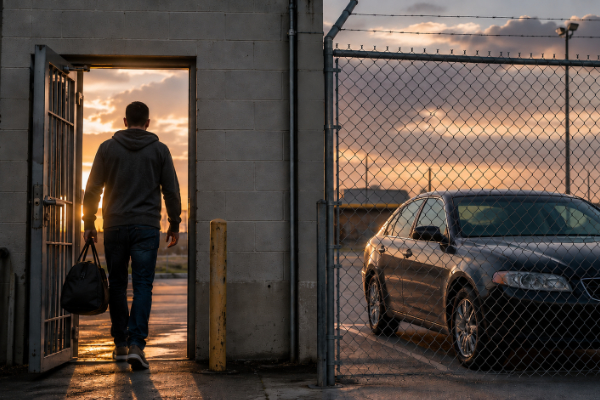
Posting bond resolves the custody issue; it does not automatically release a towed vehicle. Someone leaving jail may still need a ride while the car is being located or recovered. We covered the importance of planning transportation after release in a recent article; that's definitely worth a read.
Tayler Made Bail Bonding can help families move through the bail process quickly, but the vehicle should be treated as a separate task: find out where it is, determine whether it is releasable, and address the tow before storage time and costs continue to grow.
Vehicle & Impound FAQs
No. Whether a car is towed depends on factors like where it’s parked, whether another licensed and sober driver can legally take it, and the arresting agency’s policies. If it’s blocking traffic, in a dangerous spot, or in a restricted area, towing is much more likely.
In a police-directed tow, the law-enforcement agency typically uses a rotation list or contract tow provider. The officer on scene does not usually shop around for rates; they follow the agency’s tow policy or rotation system.
Often yes, but the tow yard will usually require proof of ownership, valid identification, and a licensed driver. Some facilities may also require a notarized letter or specific authorization if the person retrieving the vehicle is not the registered owner.
If law enforcement has placed a hold because of an ongoing investigation or because the car is evidence, the tow company cannot release it until that hold is lifted. You or your attorney will need to contact the agency that ordered the hold to find out what is required for release.
Storage is typically charged by the day and begins shortly after the vehicle arrives at the tow yard. Fees can grow rapidly, especially if weekends or holidays are involved, so it’s important to locate the vehicle and address release or payment as soon as possible.
Yes. Under Colorado law, qualifying unclaimed vehicles may eventually be sold or otherwise disposed of after required notices and waiting periods. If you receive notice from a tow yard or the state about an “abandoned” or unclaimed vehicle, do not ignore it—respond by the stated deadline.
No. A bail bond deals with your release from custody, not the vehicle. A bondsman can help you get out of jail faster so you can handle the impound, but you must separately contact the agency and tow company, confirm any holds, and pay applicable towing and storage fees.
Contact Info
Tayler Made Bail Bonding is available 24 hours a day and 7 days a week.
(303) 623-0399email@taylermadebailbonding.com
7220 W Jefferson Ave
Suite 200
Lakewood, CO 80235
@TaylerMadeBail